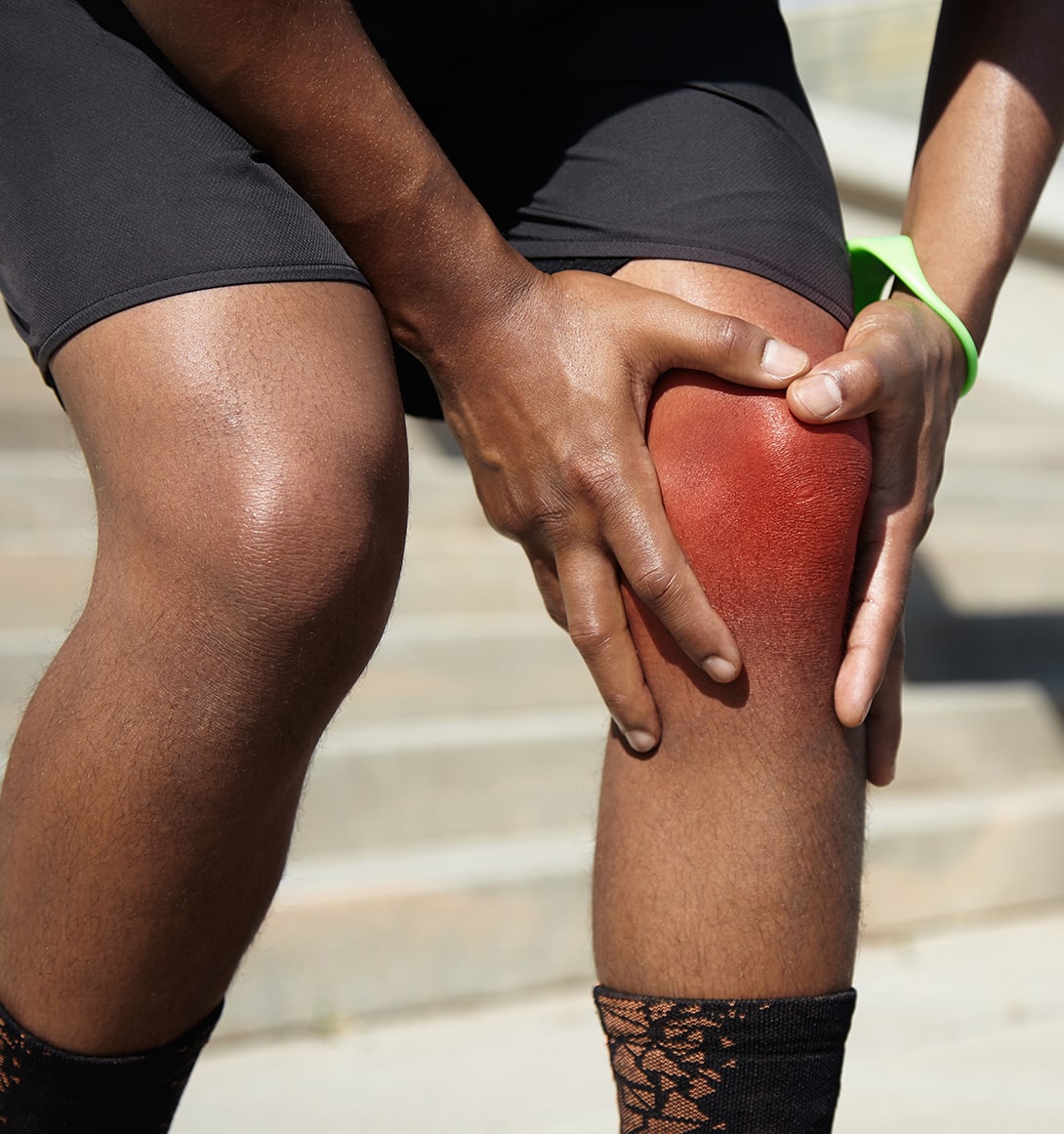
Does your knee hurt whenever you climb stairs, even though walking on level ground feels easier? This is useful information for an assessment, but it is not a diagnosis. The location of the pain, how it began and any accompanying symptoms help a professional consider possible causes.
This guide helps you prepare for a consultation. It does not replace an examination or provide a universal exercise programme.
When does knee pain need urgent medical attention?
Seek urgent medical assessment if pain is severe, you cannot move the knee or bear weight, or there is significant swelling or a change in shape. Locking, giving way or painful clicking also needs prompt assessment. A hot, red knee with fever or chills may indicate infection. Do not wait for a routine physiotherapy appointment in these situations. [1]
Pain at the front of the knee: patellofemoral pain is one possibility
Patellofemoral pain affects the front of the knee and the area around the kneecap. It may occur on stairs, when kneeling, running or repeatedly bending the knee. It does not affect athletes alone. A sudden increase in activity frequency, duration or intensity may contribute. [2]
However, pain on stairs does not prove that this is your condition. Other possibilities should be discussed during an assessment. A description of a symptom is not an examination result.
What other causes might be considered?
Pain after a twist or injury may involve different structures, including ligaments or the meniscus. Pain below the kneecap after repeated running or jumping may involve a tendon. Pain and stiffness without a clear injury can have other causes, including osteoarthritis. These are possibilities to assess, not a checklist for self-diagnosis. [1]
What should you tell the professional?
Prepare a specific description of your experience:
- Where is the pain: at the front, inside, outside or back of the knee?
- When did it start, and was there a fall, twist or change in training?
- Does it happen going up, coming down or both?
- Is there swelling, locking or a feeling that the knee gives way?
- Which everyday tasks have become harder?
- What have you tried, and how did your symptoms respond?
You do not need to repeatedly provoke the pain to demonstrate it. A short note and any existing reports can make the conversation clearer.
How can physiotherapy help?
For patellofemoral pain, management may include activity adjustments and therapeutic exercise. Programmes may target thigh and hip muscles, depending on the assessment. The aim is not to give the same exercise list to everyone with pain on stairs. [2]
For diagnosed osteoarthritis, NICE recommends tailored therapeutic exercise, such as muscle strengthening and aerobic activity. There may be some discomfort initially, but consistent participation in an appropriate programme can improve pain and function. This does not mean continuing through severe pain or warning signs without assessment. [3]
How can improvement be measured?
Agree on understandable goals with your professional: which stairs you want to manage, which activity you want to resume and when the plan will be reviewed. Ask how the programme will change if symptoms do not improve.
A promise such as “it will definitely resolve in three sessions” does not reflect differences between patients. Look for a plan with goals and reassessment, rather than the same guarantee for everyone.
Frequently asked questions
Does pain on stairs mean I have damaged my meniscus?
No. This description alone does not identify the cause. The injury history and examination matter. [1,2]
Should I immediately start exercises from the internet?
A video cannot assess your symptoms. If exercises are being used as treatment, ask for their selection and intensity to be matched to your problem. [2,3]
When should I arrange a non-urgent appointment?
Arrange an appointment if pain does not improve within a few weeks. The warning signs above require earlier help. [1]
Assessment and rehabilitation in Tirana
For information about a consultation and rehabilitation services, contact PhysioLife in Tirana. Describe your symptoms and bring existing documents. If there are urgent warning signs, seek appropriate medical care rather than waiting for a response through the website form.
Sources
- NHS — Knee pain.
- AAOS OrthoInfo — Patellofemoral Pain Syndrome.
- NICE NG226 — Osteoarthritis: recommendations.
Sources consulted on 12 September 2026. Educational content; not a substitute for individual diagnosis or treatment.